
You open your phone to check one thing.
Maybe it is a headline, a message, or a quick look at social media before bed. A few minutes later, you are still scrolling. Your shoulders have tightened. Your mind is racing. You have taken in more information than you can process, yet somehow it feels difficult to put the phone down.
If this sounds familiar, you are not alone.
Many of us are living with a constant stream of news, opinions, images, and alerts. It can keep us informed and connected, but it can also leave us feeling unsettled, helpless, or emotionally exhausted. This experience is often called doomscrolling: repeatedly consuming distressing online content, even when it is making us feel worse.
Doomscrolling and anxiety often go hand in hand. Not because you are weak or lacking self-control, but because your mind and body may be trying to make sense of uncertainty in the only way that feels available: by looking for more information.
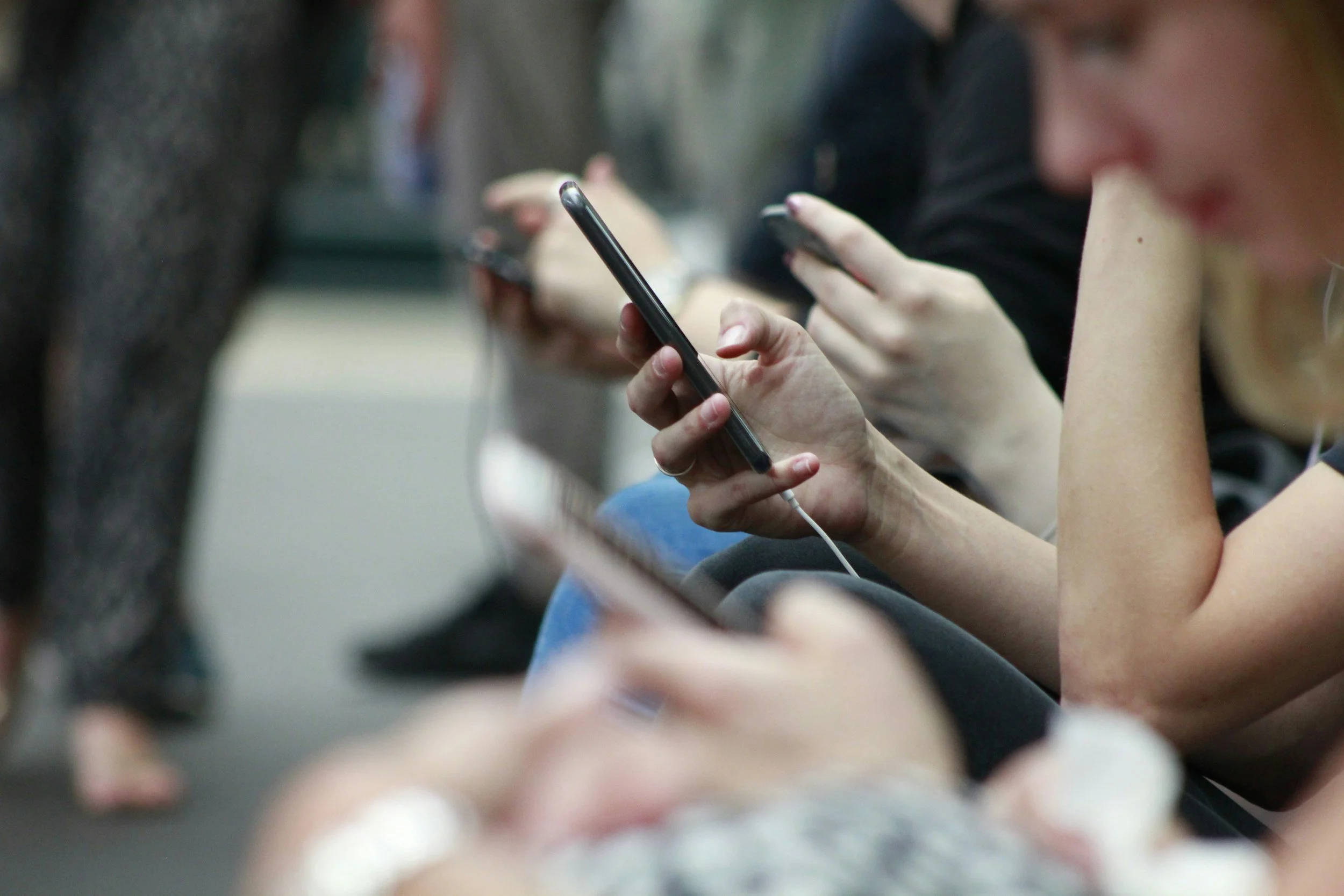
What is doomscrolling?
Doomscrolling is the habit of continuing to scroll through upsetting news, social-media posts, comments, or videos, often long after it has stopped feeling useful.
It might look like:
• Reading difficult headlines late at night
• Refreshing social media for updates on a stressful event
• Moving from one upsetting video to another
• Comparing your life to carefully curated versions of other people’s lives
• Feeling unable to stop checking for new information, even when you feel more anxious each time
The urge to keep looking can make sense. When life feels uncertain, information can feel like a form of control. We may hope that one more article, comment, or video will help us feel prepared. But often, the result is the opposite: more tension, more questions, and less room to rest.
Why scrolling can make anxiety feel louder
Our nervous systems were not designed to absorb a near-constant flow of distressing information from around the world.
When we are exposed to frightening, enraging, or emotionally charged content again and again, our body may respond as though danger is still close by. You may notice a faster heartbeat, shallow breathing, tension in your jaw or shoulders, difficulty concentrating, or trouble falling asleep.
Research has found an association between frequent negative online news consumption and lower well-being, including greater anxiety and secondary stress. This does not mean that every person who scrolls will experience these effects, or that scrolling is the only cause of anxiety. It does suggest that the way we use our phones can matter—especially when we are already carrying stress, grief, trauma, burnout, or uncertainty. A 2024 study on doomscrolling and well-being explored this connection.
A recent Canadian finding also noted that people spending four or more hours a day scrolling social media, watching entertainment, or gaming were about twice as likely to report severe anxiety or depression symptoms. That is an association, not proof that screen time causes mental-health concerns. Sometimes scrolling may be part of how someone is already trying to cope with distress.
The important question is not, “Am I using my phone too much?” It may be more helpful to ask, “How do I feel before, during, and after I scroll?”
Signs digital overload may be affecting your wellbeing
Not every moment online is harmful. Phones can offer connection, laughter, creativity, community, and support. Still, it may be worth pausing if you notice that scrolling regularly leaves you with:
• Racing thoughts or a persistent sense that something bad is about to happen
• Irritability, numbness, or emotional exhaustion
• Difficulty sleeping after using your phone
• Body tension, headaches, or a restless feeling
• Trouble being present with work, family, or friends
• A tendency to compare your life harshly with others
• Guilt about the time you spend online, followed by more scrolling
These are not signs that you have failed. They may be your mind and body asking for a little more care, space, or protection from overwhelm.
When uncertainty already feels close to home, digital content can intensify it. Our post on navigating career and relationship uncertainties explores ways to meet the unknown with more steadiness and self-compassion.
Why “just stop scrolling” is not always enough
Advice to simply put the phone away can sound easy, but it may overlook what scrolling is doing for us.
Sometimes we scroll because we are looking for certainty in uncertain times. Sometimes we are seeking connection when we feel lonely. Sometimes it offers distraction from a difficult feeling, a stressful relationship, or an uncomfortable quiet moment. Sometimes we are trying to understand an issue that genuinely matters to us.
Doomscrolling may be less about a lack of discipline and more about a need that has not yet found another place to go.
Approaching the habit with curiosity can be kinder and more effective than approaching it with shame. Instead of asking, “Why can’t I stop?” you might try asking:
• What am I hoping to find right now?
• Am I looking for information, reassurance, distraction, or connection?
• Do I feel more settled after scrolling—or more activated?
• What else might support this need, even in a small way?
Gentle ways to create a healthier relationship with your phone
Choose intentional times to check the news
Rather than absorbing updates throughout the day, consider choosing one or two times when you will check reliable news sources. This can help you stay informed without carrying every update with you from morning until night.
If possible, avoid checking distressing news just before sleep. Your body deserves a chance to wind down.
Notice your “entry point”
Before opening an app, pause for one breath and name what you are looking for.
You might say to yourself: “I want to check in with a friend,” “I want to know what happened today,” or “I am feeling anxious and looking for reassurance.”
This small moment of awareness can help you decide whether scrolling is likely to meet the need—or whether another choice may feel more supportive.
Create a transition after difficult content
If you have just read something upsetting, try not to move immediately into the next task as though nothing happened. Give your nervous system a signal that you are here, in the present.
You might step outside for a few minutes, make tea, stretch, listen to one calming song, or simply look around the room and name a few things you can see. Our guide on how to regulate your nervous system in minutes offers additional gentle ideas for moments when you feel activated.

Curate your digital environment
Muting, unfollowing, limiting notifications, or taking a break from certain accounts is not avoidance or indifference. It can be a meaningful boundary.
Consider which accounts leave you feeling informed, connected, or inspired—and which ones regularly leave you anxious, ashamed, angry, or depleted. You are allowed to make your online space more livable.
Replace one scrolling moment, not every scrolling moment
Big changes can feel overwhelming. Start with one predictable moment: perhaps the first ten minutes after waking up, your lunch break, or the time before bed.
Choose one small alternative that still feels accessible. You might sit outside, text someone you trust, write down what is on your mind, or let yourself rest without filling the silence. If slowing down brings up guilt, you may also find support in our post on how to deal with guilt when you need to slow down.
The goal is not to earn rest by being productive. It is to make room for something that helps you return to yourself.
When digital overwhelm connects to deeper stress
For some people, doomscrolling becomes more intense during periods of anxiety, trauma, grief, burnout, loneliness, or major change. When the ground already feels shaky, the online world can make everything feel more urgent.
If scrolling has become one of the main ways you cope, it may be helpful to explore what is underneath it with compassion. Perhaps you are carrying a fear that has not had room to be spoken. Perhaps you are feeling disconnected from yourself or others. Perhaps your body has been in a state of vigilance for so long that slowing down feels unfamiliar.
There is no need to figure this out alone.
We Are Here for You
Your need for rest deserves care. In a world that is always asking for your attention, it can be difficult to hear your own needs clearly.
At Resting Tree Counselling, we offer trauma-informed support for anxiety, burnout, difficult emotions, and the patterns that can leave you feeling constantly on edge. Together, we can explore what digital overload may be holding, while finding gentler ways to reconnect with yourself.
We offer in-person counselling in Vancouver and Port Moody, as well as virtual counselling across British Columbia. Whenever you are ready, book your free 15-minute consultation or contact Resting Tree Counselling to learn more.
You do not need to be completely offline to feel more present. One intentional pause can be a beginning.
References
[1] - Doomscrolling and mental well-being in social media users
https://pubmed.ncbi.nlm.nih.gov/38429976/
[2] - Screen use and mental health — Mental Health Research Canada
https://www.mhrc.ca/webcasts/tbmhb-13082026
[3] - Doomscrolling during COVID-19: Media consumption and mental health symptoms
https://pmc.ncbi.nlm.nih.gov/articles/PMC10074257/